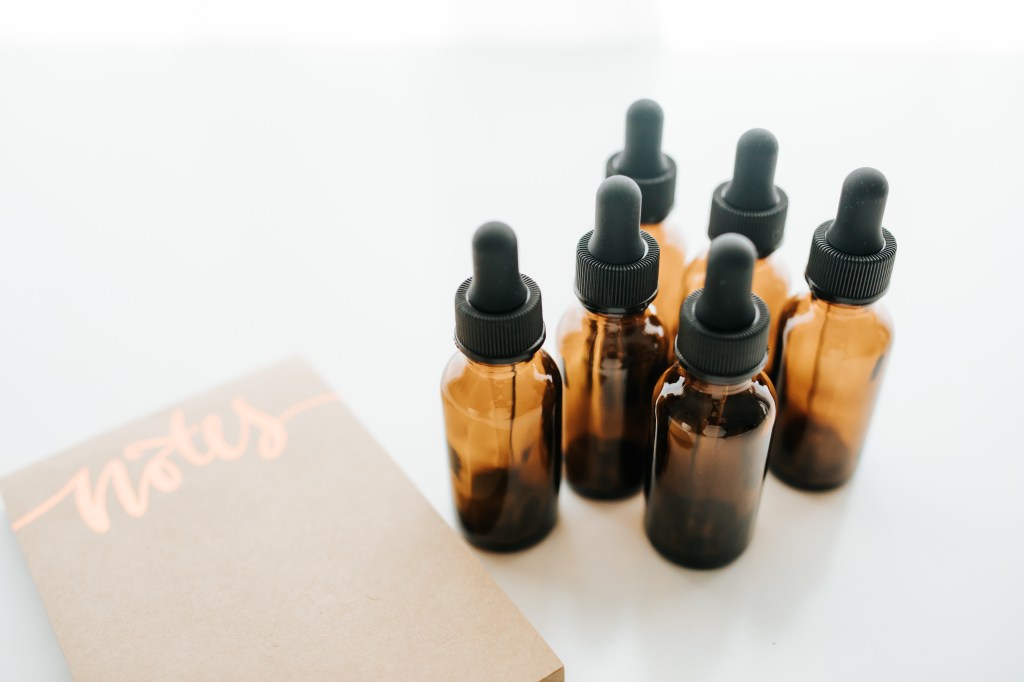
We all have our favourite essential oils and many of these are the timeless classics that we reach for time and time again. But here are three of my favourite underrated oils that, quite often on their own, seem nothing too special, but added to a blend can transform it into something wonderful.
Palmarosa: Cymbopogon martini; is a tufted perennial grass from the Gramineae family. It has a sweet, mild, slightly floral scent, and on its own is nothing special, but palmarosa’s magic kicks in when blended with other mid-note oils such as rose and lavender, adding a lovely depth to the blend. Palmarosa has excellent skincare properties, it can balance sebum and help regenerate new skin cell production. Its antiseptic properties can be useful for treating acne and blemishes. Palmarosa is balancing on the skin and has antiseptic and hydration properties and that it is recommended for acne, dermatitis, minor skin infections and dry, undernourished skin.
Niaouli: Melaleuca viridiflora/quinquenervia is part of the Myrtaceae family. It is steam distilled from the leaves and shoots. Native to Australia, it occurs in Southeast Queensland and the north coast and adjacent ranges of New South Wales. It grows along streams and on swampy flats, and is often the dominant species where it occurs. It is a top note oil. On initial smell its very medicinal, almost vic vapour rub like. Niaouli is milder than eucalyptus and so is a good alternative when a less strong oil is preferred, which is often the case.
Its therapeutic properties include being analgesic, immuno-stimulant, anti-catarrhal, anti-rheumatic, antiseptic, antispasmodic, bactericidal, balsamic, cicatrisant, diaphoretic, expectorant, regulator, stimulant and vermifuge. Niaouli is a bit more mild than eucalyptus and so maybe a good alternative when a less strong oil is preferred. For the nervous system it is good for post viral nervous depression. It can be used for muscular aches and pains, and rheumatism. Poor circulation, hypertension. For the skin – fungal infections, acne, boils, burns, cut insect bites, oily skin, ulcers, and wounds. Useful for preventing radiotherapy burns. Sinusitis, bronchitis, chronic catarrh. Gastric and duodenal ulcers, Viral hepatitis, viral enteritis, genital herpes. Amenorrhoea, leucorrhoea. For the immune system it can activate defences and augments leukocytes and antibodies in infected areas. It is also good for coughs, colds, and infections.
Vetiver: Vetiveria zizanoides, is part of the Poaceae family. The oil is obtained by steam distillation of the roots. Vetiver is a base note oil and on initial smell it is very pungent, strong and heavy. However, it is one of my favourite oils when used in a blend. Just a drop or two in a blend with rose and bergamot is wonderful.
Vetiver is a perennial grass native to India. In western and northern India, it is popularly known as khus. Vetiver can grow up to 1.5 metres high and form clumps as wide. Its therapeutic properties include being antiseptic, antispasmodic, depurative, rubefacient, sedative, stimulant to the circulatory, production of red corpuscles, tonic and vermifuge. Vetiver is relaxing and is beneficial for anyone experiencing stress, anxiety, insomnia or depression. It is recommended for physical, mental and emotional burnout which results from total exhaustion. Vetiver is reputed to regulate hormonal secretions of oestrogen and progesterone, making it helpful during menopause where hormones need supplementing and its grounding and cooling effects will help to reduce the symptoms of hot flushes. Vetiver is useful for PMS because of endocrine and emotional reasons. For skin care, vetiver oil assists in strengthening the body’s connective tissue. It is beneficial for weak, loose or fatigued skin. Research suggests using it during and after childbirth to minimise stretchmarks. Research shows Vetiver oil mainly influences the subcutis. Its application is especially recommended where the skin has become atrophic and slack and where there is too little adipose tissue built up. The resorptive power of the skin is stimulated so that the tissue development will be strengthened and vitalised.
Please always use essential oils with considered care, just because something is natural it does not mean its safe. Always consult with a qualified aromatherapist if unsure especially pregnant women.
 The Goddess Notes
Leave a comment