
Our sense of smell, as well as being the most immediate of the senses, is also the most fleeting.
For any substance to have an odour, it must exist in the form of a vapour – where its molecules are light enough to evaporate into the atmosphere, and where they can reach the nose or mouth.
Research shows that our sense of smell is fully developed after just three months in the womb. Once we are born, it gradually develops as we discover new smells and link them to our experiences. For example, babies and small children have to learn what is a pleasant or unpleasant smell – it’s not something we automatically know and can vary greatly from person to person. As we ‘learn’ most smells while growing up, our childhood memories are likely to influence the smells we like and dislike. Once deeply rooted like this, its difficult to reprogram the associations we have with a familiar smell.
Our sense of smell is connected to our primitive brain, which links smells with past experiences. It is more closely associated with our feelings, emotions, and behaviour than any other of the senses. Strong mental associations between smell and a situation of intense pleasure, sadness, or another emotion can be buried in the unconscious memory for years until they are suddenly brought to the surface by an encounter with an identical or a similar smell. They can trigger the same thoughts and feelings that were originally felt.
Olfaction
The part that detects the smell is known as the olfactory organ and consists of very thin, twin membranes which are located on each side of the bony part of the nasal septum. It is thought that the olfactory organ contains in the region of 800 million nerve endings, known as olfactory hairs. These are connected with the secondary neurons of the adjacent structure called the olfactory bulb, which extends to form the olfactory nerve. Via the olfactory nerve tract, an olfactory signal is transmitted to the brain. Neurons from the olfactory tract project to several parts of the brain that constitute the limbic system. The limbic system is situated in the temporal lobes of the brain, it is a diffuse region associated with emotional response, memories and pleasure – and where there is no conscious control.
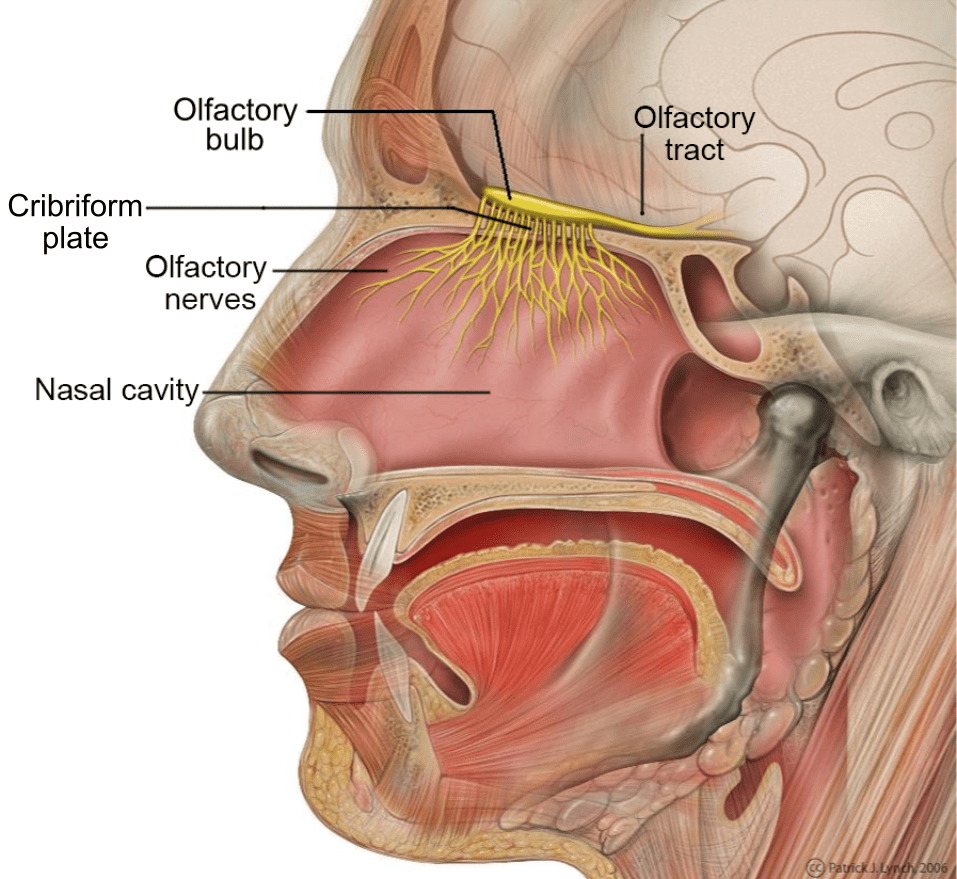
How essential oils work on the mind and body:
Whenever essential oils are inhaled, the odoriferous molecules may pass down the trachea into the bronchi, and then the bronchioles and finally into the alveoli, where the essential oil molecules pass into the bloodstream. They may be absorbed into the bloodstream via the nasal mucosa. Or bind to the olfactory cilia, thus triggering an olfactory response.
The lipophilic nature of essential oils means that they pass the blood-brain barrier easily. Their affinity for lipid-rich tissues like those of the central nervous system facilitates an exchange of essential oil constituents from the blood into the lipid-rich nervous system. Studies have shown that essential oils are readily absorbed into the bloodstream through inhalation. They have high solubility in the blood and excellent absorption takes place through the nasal mucosa and pulmonary system. Within the effects of olfaction we can attempt to modulate and regulate vital endocrine functions and their related behaviours using essential oils. This is because a hormone is a substance secreted by one tissue that travels through the blood or body fluid to another tissue whereby the hormone arouses a new state of activity within that tissue. Our body tissues respond to specific hormones that contain specially shaped molecular receptors, that each have an effect only on those targeted specific tissues. Essential oils can therefore be used to try and highlight specific targets within the structure of the hormone and attempt to stimulate an action depending on whether the action required is a stimulating or inhibiting one.
Via the olfactory response in the brain every important endocrinological function may be influenced. The endocrine system is responsible for water and fluid content and their components; body temperature; easting, drinking, waste behaviour and function; sleeping, reproduction and sexual behaviour; pain, memory and learning; blood sugar regulation and energy and metabolic rates.
Essential oils affect the endocrine regulating organs in the brain via neuro-anatomical connections with the olfactory system and its close proximity to the limbic system, the hypothalamus and pituitary plays a key role to alleviate stress related syndromes such as anxiety, depression and fatigue, which in turn can help the physical effects of the body.
Please always use essential oils with considered care, just because something is natural it does not mean its safe. Always consult with a qualified aromatherapist if unsure especially pregnant women.

 The Goddess Notes
Leave a reply to Fragrant Words – The Goddess Notes Cancel reply